Dental Implant Vs Bridge: Which Is Better For One Missing Tooth?

Losing one tooth can seem like a small problem, especially if the gap is toward the back of the mouth. However, replacing a missing tooth may help restore chewing, support your bite, and improve the appearance of your smile. Two common fixed options are a dental implant and a dental bridge.

So, when comparing a dental implant vs bridge, which is better?

There is no single answer for every patient. A dental implant replaces the missing tooth without requiring the neighbouring natural teeth to support the replacement. A traditional dental bridge fills the gap by using teeth on either side as anchors. A bridge can usually be completed sooner, while implant treatment normally involves surgery and a healing period.

Your gum health, bone support, neighbouring teeth, medical history, bite, treatment timeline, and budget can all affect which option makes more sense.

If you are deciding between an implant vs bridge in North York, understanding these differences before your dental assessment can make the conversation much easier.
Implant Vs Bridge

Dental Implant Vs Bridge: Quick Answer

A dental implant may be considered when there is enough healthy bone and gum support, the patient is suitable for implant surgery, and preserving the neighbouring teeth is important.

A dental bridge may be considered when a fixed replacement is wanted but implant surgery is not suitable or preferred, or when the neighbouring teeth could also benefit from being restored with crowns.

Here is the basic difference:

Factor Dental Implant Traditional Dental Bridge
What replaces the tooth? Implant fixture, abutment, and replacement tooth Artificial tooth attached to crowns on neighbouring teeth
Neighbouring teeth prepared? Usually no Usually yes
Surgery required? Yes Usually no
Treatment time Usually longer because healing is required Usually shorter
Bone required? Adequate bone is needed for implant support Implant-level bone support is not required
Cleaning Brushed and cleaned around the implant Special cleaning is needed under the artificial tooth
Fixed or removable? Fixed Fixed
Best choice for everyone? No No

The right treatment depends on the condition of your whole mouth, not just the empty space.

How A Dental Implant Replaces A Tooth

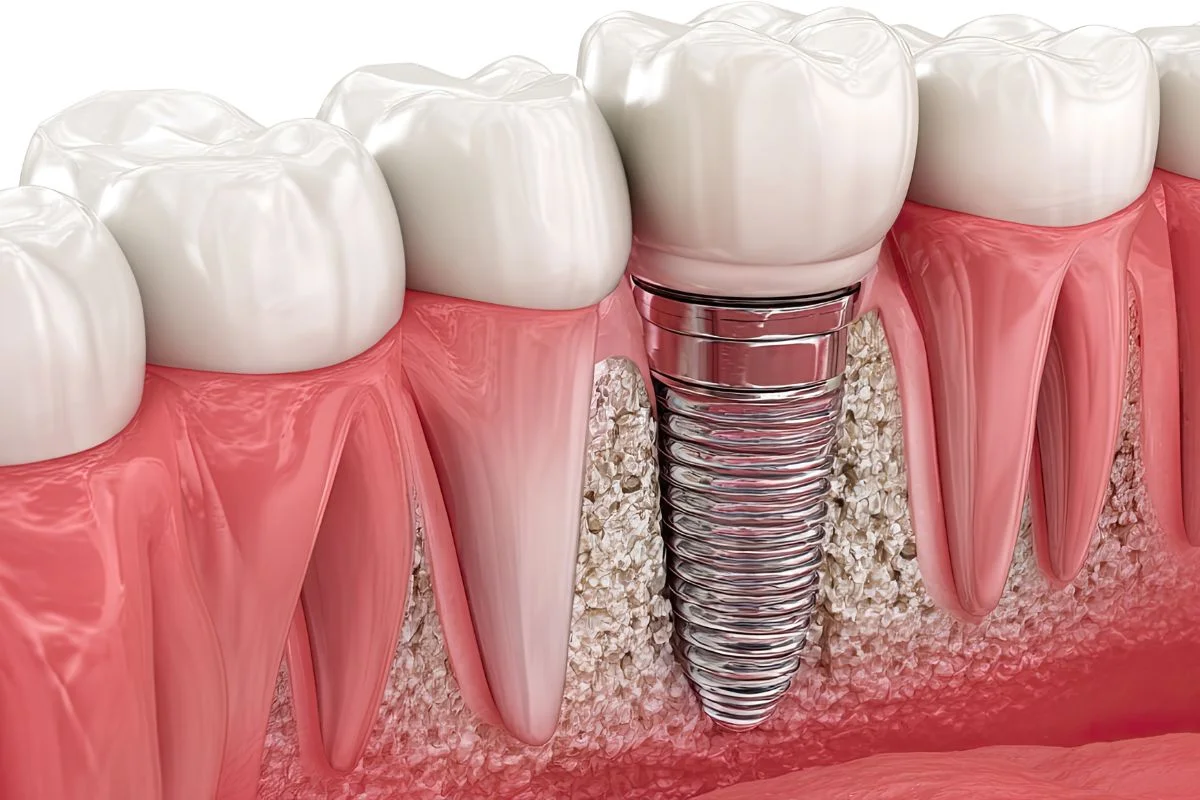
A single-tooth dental implant replaces both the missing root area and the visible tooth.

The Canadian Dental Association describes dental implants as artificial roots placed into the jawbone to support replacement teeth.

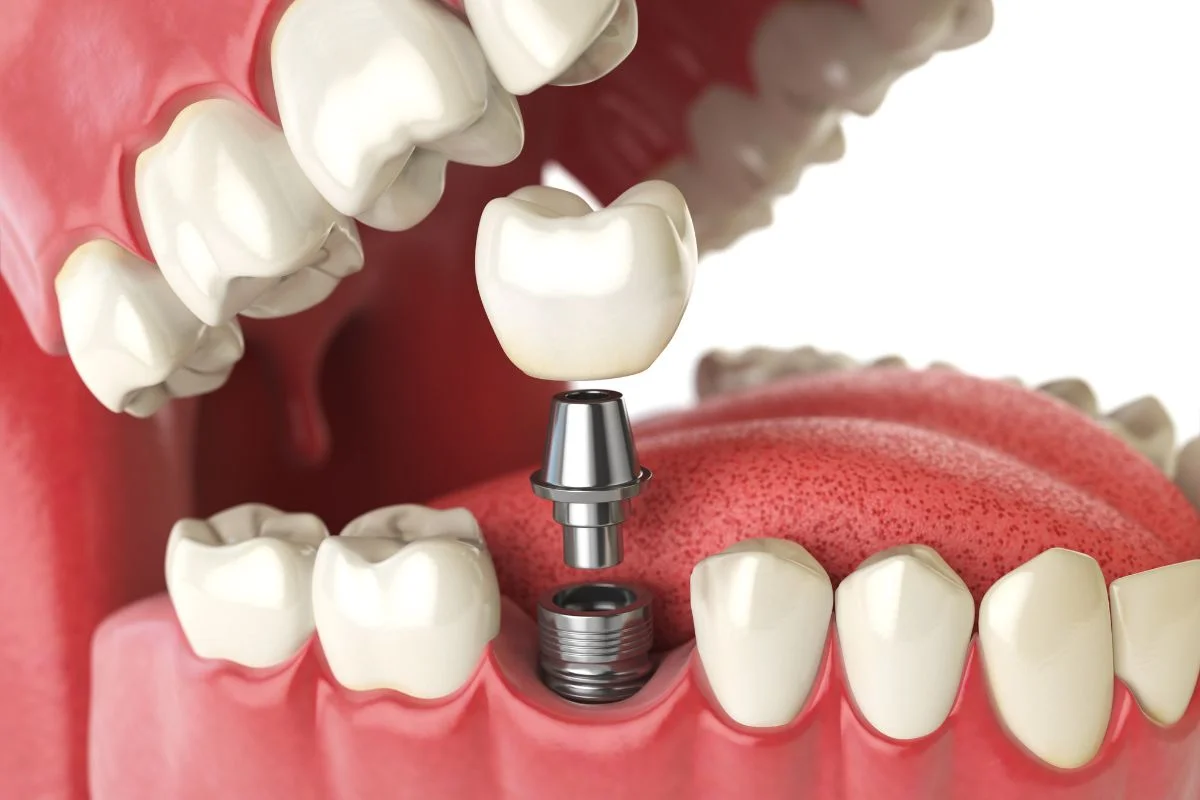
A typical single-tooth implant has three main parts:

Implant Fixture

The implant fixture is placed into the jawbone. It acts as an artificial root and provides support for the replacement tooth.

Abutment

An abutment connects the implant fixture to the visible restoration above it.

Implant Crown

The crown is the part that looks like the missing tooth and is attached to the implant system.

Patients considering dental implants in North York need an assessment before treatment can be planned. The dentist evaluates the gums, bone, bite, medical history, missing-tooth space, and other factors that can affect implant treatment.

Mint 32’s current implant process includes consultation and imaging, implant placement, a healing period, and placement of the final restoration after healing has been assessed.

How Does A Dental Bridge Work?

A traditional dental bridge takes a different approach.

Instead of placing an artificial root into the jaw, the dentist uses natural teeth next to the missing space to support the replacement tooth.

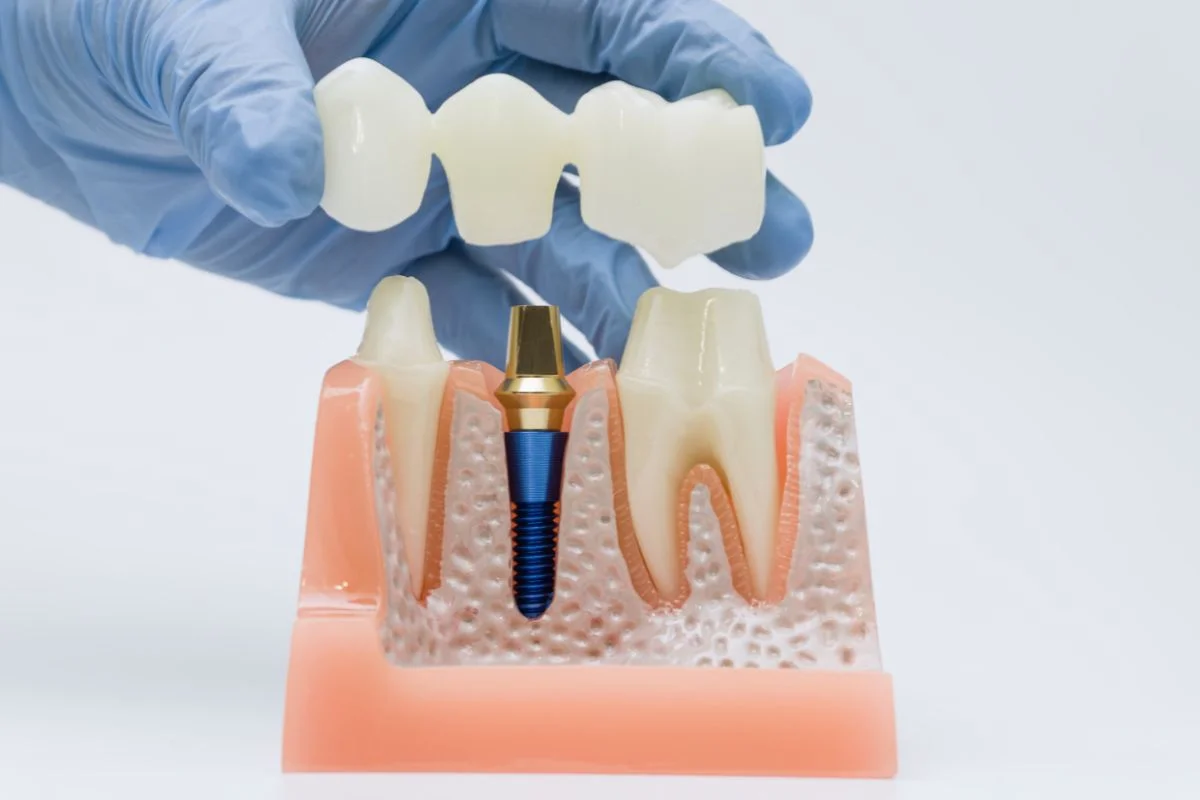
A traditional bridge normally includes:

  • An artificial replacement tooth, called a pontic.
  • A crown on the tooth on one side of the gap.
  • A crown on the tooth on the other side of the gap.
  • A connected restoration that is fixed in place.

The Canadian Dental Association explains that a traditional bridge usually involves preparing the teeth on both sides of the missing space so crowns can support the artificial tooth between them.

Patients exploring dental bridges in North York should therefore have the neighbouring teeth carefully examined. Their strength, existing restorations, gum support, and position can affect whether a bridge is appropriate.

A bridge is fixed in place. Unlike a removable partial denture, the patient does not take it out at night.


What Happens To Neighbouring Teeth?

This is one of the biggest differences in the dental implant vs bridge decision.


With A Dental Implant

A single-tooth implant is generally independent of the neighbouring natural teeth.

The teeth beside the gap usually do not need to be filed down simply to support the implant crown.

The Canadian Dental Association specifically notes that a single implant between healthy teeth can avoid having those healthy teeth prepared for bridge crowns.

This can be an important advantage when both neighbouring teeth are healthy and have never needed large restorations.

With A Traditional Bridge

The teeth beside the gap serve as anchors.

To make room for the crowns that support the bridge, these teeth normally need to be prepared. Once teeth have been prepared for full-coverage crowns, that change cannot simply be reversed.

This does not automatically make a bridge a poor option.

Suppose the teeth on either side of the missing space already have very large fillings, significant damage, or another reason that crowns may be needed. In that situation, using those teeth as bridge supports may fit well into the overall restorative treatment plan.

This is why the condition of the neighbouring teeth matters as much as the missing tooth itself.


Bone-Health Considerations

Bone is another important difference between a bridge and an implant.

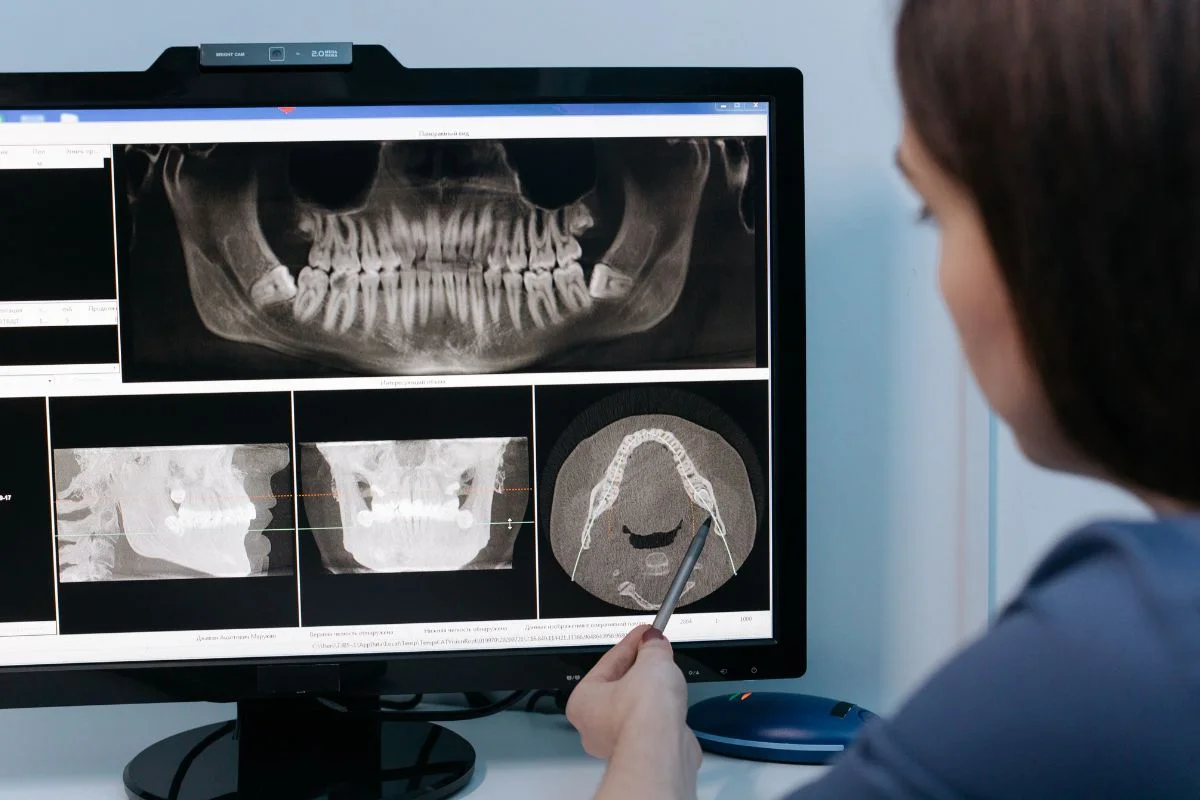
A dental implant is placed into the jawbone and therefore requires enough bone in the planned implant area. The Canadian Dental Association recommends examination and dental imaging to determine whether implants are suitable.

If the available bone is inadequate, implant placement may not be possible without additional treatment.

Mint 32’s implant information also notes that bone volume is assessed before treatment and that bone grafting may sometimes be discussed when there is not enough bone to support an implant.

A traditional tooth-supported bridge does not place an implant into the missing-tooth site. Its support comes mainly from the neighbouring teeth.

That means the two treatments manage the empty space differently.

It is also important not to oversimplify this topic. An implant does not guarantee that bone levels will never change. Bone and gum tissues still need long-term monitoring, healthy home care, and professional dental maintenance.


How A Dental Implant Replaces A Tooth

Implant Vs Bridge Treatment Time

For some patients, treatment time strongly affects the decision.

Dental Implant Treatment

Implant treatment normally happens in stages.
The process may involve:

  1. Examination and imaging.
  2. Treatment planning.
  3. Implant placement.
  4. Healing and integration with the surrounding bone.
  5. Placement of the abutment and final tooth restoration.

Because healing is part of the process, an implant usually takes longer than a traditional bridge. The Canadian Dental Association notes that implant treatment can require several stages and appointments.
Additional procedures can extend the timeline further.
For example, a patient who needs bone grafting before implant placement may have a longer overall treatment plan than someone who already has adequate bone.

Dental Bridge Treatment

A traditional bridge generally does not require the same implant-healing stage.
The process can include:

  1. Examining the supporting teeth.
  2. Preparing the anchor teeth.
  3. Taking an impression or digital scan.
  4. Placing a temporary restoration when required.
  5. Fabricating the permanent bridge.
  6. Checking the fit and bite.
  7. Cementing the finished bridge.

The CDA describes traditional bridge treatment as involving preparation, impressions, temporary protection, and placement of the finished bridge.

Cleaning And Maintenance

Both implants and bridges require daily cleaning.

Neither treatment becomes maintenance-free after it is completed.

Cleaning A Dental Implant

Implants need regular brushing, cleaning between teeth, and professional dental examinations.

The Canadian Dental Association states that implant-supported teeth need to be kept clean with brushing and flossing and should be checked regularly.

The gums around the implant are especially important. Plaque accumulation around an implant can contribute to inflammation and problems with the tissues supporting it.

Cleaning A Dental Bridge

A bridge requires a slightly different cleaning technique because the replacement tooth is connected to its supporting crowns.
Normal floss cannot simply pass down between the pontic and the gum from the biting surface.
Patients may be shown how to use:

  • Floss threaders.
  • Special bridge floss.
  • Interdental brushes where appropriate.
  • Other dentist-recommended cleaning aids.


What If Neither An Implant Nor A Bridge Is The Best Option?

Implants and bridges are not the only ways to replace missing teeth.

Depending on the number and location of missing teeth, the condition of the remaining teeth, finances, health, and patient preferences, dentures for missing teeth may also be discussed.

A removable partial denture can replace one or more missing teeth and can be removed for cleaning.

The Canadian Dental Association notes that partial dentures may be considered when nearby teeth cannot support a bridge or when several teeth are missing.

This is why a missing-tooth consultation should examine all reasonable options rather than beginning with the assumption that every patient needs the same treatment.


How Does A Dental Bridge Work

Cost And Dental-Benefit Considerations

Cost can influence the bridge or implant for missing tooth decision, but treatment should not be compared using the starting price alone.

Factors that can affect cost include:

  • Number of missing teeth.
  • Number of implants required.
  • Need for bone grafting or other treatment.
  • Materials used.
  • Condition of the neighbouring teeth.
  • Laboratory work.
  • Complexity of the bite.
  • Private dental-plan coverage.

Implant treatment often involves surgical and restorative stages, while a traditional bridge involves the supporting teeth and a laboratory-made restoration.

Private dental insurance varies significantly. Patients should request a treatment estimate and confirm what their own plan covers before assuming either option will be reimbursed.

Mint 32 provides information about payment options for patients planning restorative care.


Important CDCP Information For 2026

For patients using the Canadian Dental Care Plan, it is especially important to check the current federal rules rather than older information online.

The Government of Canada’s CDCP Dental Benefits Guide effective April 1, 2026 lists both:

  • Fixed prosthodontics, including bridges and bridge-related procedures, and
  • Dental implants and implant-related procedures

as exclusions from CDCP coverage.

That does not tell you which treatment is clinically better. It only affects the coverage discussion.


Your dentist may consider several questions before recommending treatment.

Your dentist may consider several questions before recommending treatment.

Are The Neighbouring Teeth Healthy?

If both neighbouring teeth are healthy and untouched, preserving them may support consideration of an implant.

If those teeth already need crowns for separate reasons, a bridge may fit differently into the treatment plan.


Is There Enough Bone For An Implant?

Dental imaging helps evaluate whether the planned implant site has suitable bone support.


Are The Gums Healthy?

Healthy gums are important around both implant restorations and natural teeth supporting bridges.


Is Implant Surgery Appropriate?

Your health history, medications, smoking status, healing factors, and other clinical considerations may affect implant planning.


How Quickly Does The Tooth Need To Be Replaced?

A bridge may have a shorter treatment timeline, while an implant normally requires healing between stages.


Can The Patient Maintain The Restoration?

Both options require daily cleaning, but the cleaning methods differ.


What Does The Patient Prefer?

Some patients prioritize avoiding surgery. Others prioritize avoiding preparation of neighbouring teeth. Some are more concerned about treatment time, while others focus on a particular long-term treatment approach.

A good treatment plan considers all of these factors together.


Choosing An Implant Or Bridge In North York

People searching for an implant vs bridge in North York should avoid choosing based only on an online comparison table.

Two people can each be missing the same tooth yet need different treatment.

One patient may have strong neighbouring teeth and enough bone for an implant. Another may have heavily restored neighbouring teeth, limited bone, or health factors that change the plan.

At Mint 32 Dentistry, missing-tooth treatment falls within a broader restorative approach that considers the health of the surrounding teeth, gums, bone, bite, and patient goals. Mint 32’s current restorative services include implants, bridges, dentures, fillings, crowns, and other treatments used to rebuild damaged or missing teeth.

The most useful question is therefore not simply, “Which is better?”

It is:

“Which option makes more sense for this particular missing tooth and the rest of my mouth?”

If you are missing one tooth and want to understand your choices, book a consultation to compare the options based on your own dental condition rather than a general online recommendation.


Dental Implant Vs Bridge

Frequently Asked Questions

Is A Dental Implant Always Better Than A Bridge?

No. Dental implants have several advantages, including avoiding preparation of neighbouring healthy teeth, but they require surgery, suitable bone, healing time, and appropriate patient health. A traditional bridge may be more suitable in some situations.

Can A Bridge Replace Just One Missing Tooth?

Yes. A traditional bridge commonly replaces one missing tooth with an artificial tooth supported by crowns on the teeth beside the gap.

Does An Implant Damage The Teeth Beside It?

A single-tooth implant usually does not require the neighbouring natural teeth to be prepared simply to support the replacement. This is one of the main differences between a single implant and a traditional tooth-supported bridge.


Which Is Faster, A Dental Implant Or A Bridge?

A traditional bridge is generally completed faster because it does not require the same implant-healing period. Implant treatment normally occurs in stages and requires time for the implant site to heal before the final restoration is completed.

Is A Dental Bridge Removable?

A traditional fixed dental bridge is cemented in place and is not removed by the patient.

Can I Get An Implant If I Have Bone Loss?

It depends on how much bone is available and other clinical factors. Dental imaging is used to evaluate the implant site. In some cases, bone grafting may be discussed before implant placement.

How Do I Know Which Missing-Tooth Option Is Right For Me?

The decision normally requires an examination of the missing space, neighbouring teeth, gums, bone, bite, medical history, and personal treatment priorities.