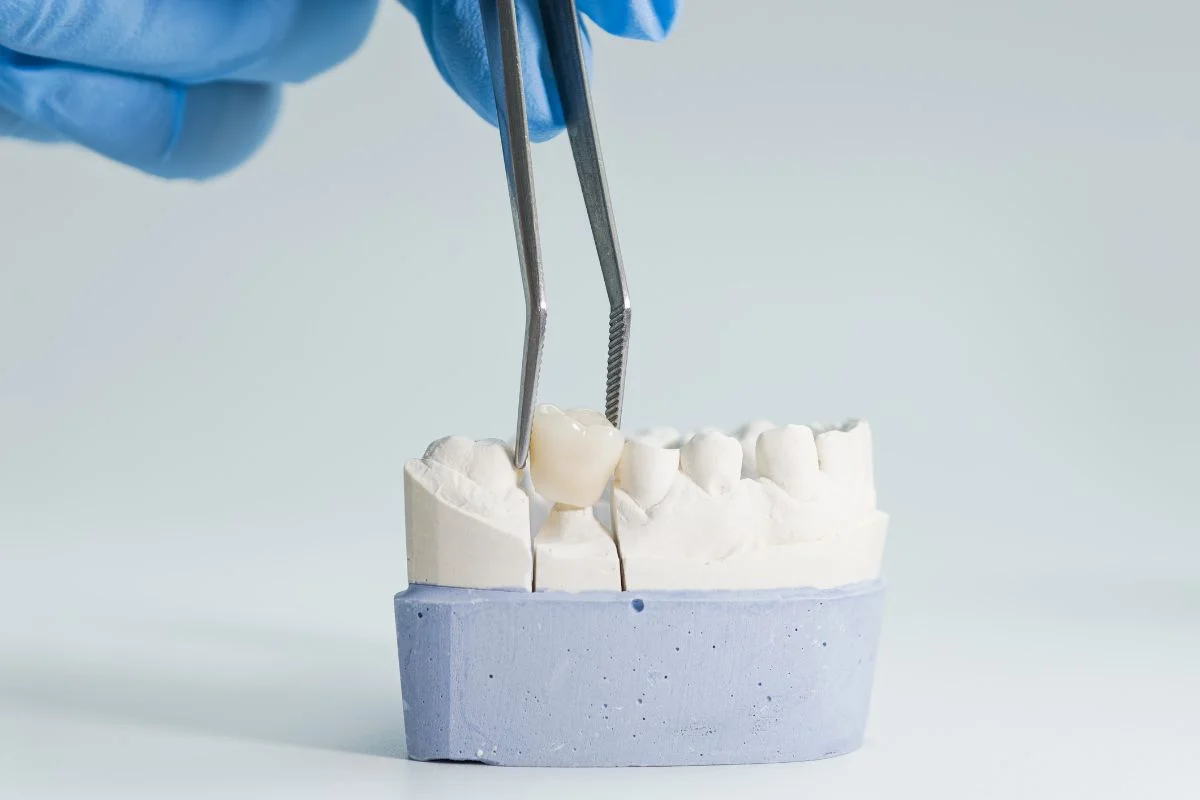
Dental Crowns in North York — Protect and Restore a Damaged Tooth

When a tooth has too much damage for a filling to fix reliably, a dental crown is the next step. A crown fits over the entire visible portion of the tooth, protecting what remains and restoring the tooth to its full shape, strength, and function.

At Mint 32 Dentistry, we fabricate crowns designed to match the colour and contour of your natural teeth so the result looks completely natural.


Book a Crown Consultation

Why Might a Tooth Need a Crown?

Several clinical situations call for a crown rather than a filling. Your dentist will explain exactly which applies to your case.

Large Cavity

When decay has destroyed too much of the tooth's structure for a filling to hold reliably, a crown provides full coverage and restores the tooth's strength.

Cracked or Weakened Tooth

A crack can run deep into a tooth over time if not protected. A crown holds the tooth together and prevents the crack from spreading further.

Worn or Damaged Tooth

Teeth worn down by grinding, acid erosion, or years of heavy use can be restored to their proper height and shape with a crown.

Root-Canal-Treated Tooth

After a root canal, the treated tooth becomes more brittle. A crown is typically placed over it to prevent fracture and restore normal function.

Root Canal Treatment

Implant Restoration

A dental crown is the visible tooth portion placed on top of a dental implant once the implant has healed and integrated with the jawbone.

Dental Implants

Dental Crown Materials

The right crown material depends on where the tooth is in your mouth and your aesthetic preferences. We only discuss materials we actually use at Mint 32.

Ceramic

All-ceramic crowns look the most natural and are the most commonly placed material for visible teeth. They match the translucency and shade of natural teeth closely and contain no metal.

Porcelain-Fused-to-Metal

These crowns have a metal base with a porcelain outer layer. They are durable and can work well in areas under heavier bite force. They may show a thin dark line at the gumline over time as the gum recedes slightly.

Your dentist will discuss which material is most suitable for your specific situation.


Dental Crown Materials

What Happens During Crown Treatment?

Crown placement usually takes two appointments, with a temporary crown worn in between.

Examination and Preparation

Your dentist examines the tooth, confirms that a crown is the right treatment, and prepares the tooth by reshaping it slightly to make room for the crown to fit over it.

Impression or Digital Scan

We take a precise record of the prepared tooth and the surrounding teeth. This record goes to the dental lab where your permanent crown is fabricated.

Temporary Crown

A temporary crown is placed on the prepared tooth while the permanent one is being made. Avoid sticky or hard foods on that side during this time.

Final Crown Placement

At the second appointment, the temporary crown is removed, and the permanent crown is checked for fit, colour, and bite before being cemented into place permanently.

Crown Versus Filling

The decision between a filling and a crown depends on how much healthy tooth structure remains.

The decision between a filling and a crown depends on how much healthy tooth structure remains.

Situation Recommended Treatment
Small to moderate cavity Filling
Large cavity with limited structure remaining Crown
Cracked tooth at risk of splitting Crown
Tooth that has had a root canal Crown
Tooth with a large failing filling Crown or filling, assessed case by case

If there is a choice, we will always discuss both options with you before proceeding.

Repairing or Replacing an Old Crown

Crowns do not last forever. With proper care, most last 10 to 15 years or longer. If a crown chips, cracks, becomes loose, or develops decay at its edges, it needs to be replaced. We assess existing crowns at every routine visit.

CDCP InformationPayment Options

Dental Crowns in North York

Frequently Asked Questions

How long does a dental crown last?

With proper oral hygiene and regular checkups, most crowns last 10 to 15 years. Some last significantly longer. The longevity depends on the material, the tooth's position, and how well the crown is cared for.

Does getting a crown hurt?

The preparation appointment is done under local anaesthetic, so you should not feel pain, only pressure. Some soreness after the anaesthetic wears off is normal and settles within a day or two.

How many appointments are required?

Crown treatment typically takes two appointments. The first is for preparation and impressions. The second is to place the permanent crown, usually one to two weeks later.

Is a crown always needed after a root canal?

Not always, but it is recommended in most cases. A root-canal-treated tooth is more prone to fracture. A crown protects it from breaking under normal chewing forces.

Can a cracked tooth be repaired with a crown?

Yes, in most cases. A crown holds the tooth together and prevents the crack from spreading. Whether this is possible depends on how deep the crack goes; your dentist will assess this before recommending treatment.

Does CDCP cover eligible dental crowns?

Yes, but preauthorization from Sun Life is required before treatment begins. Our team handles this process and confirms your eligibility before any work starts.