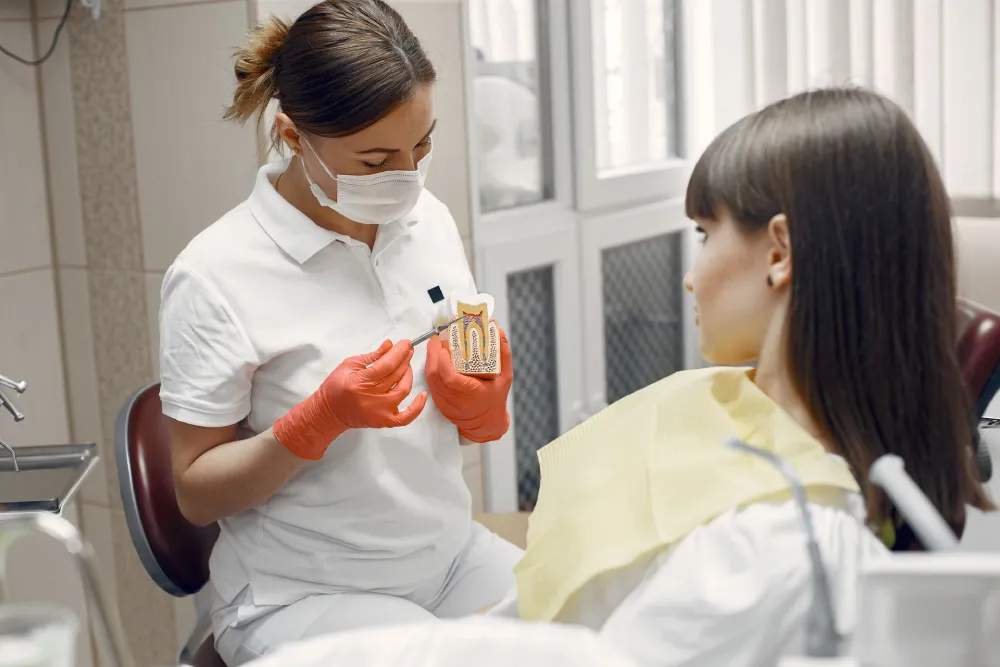
Root Canal Treatment in North York — Save Your Tooth, Relieve the Pain

Root canal treatment has a reputation for being painful. In reality, it is the infection causing the pain, not the treatment. A root canal removes the source of that infection, relieves the pain, and saves a tooth that would otherwise need to be extracted. Our general dentist performs root canal treatment with local anaesthetic so the procedure itself is comfortable for the vast majority of patients.


Book a Root Canal Consultation

Signs That a Tooth May Need Root Canal Treatment

Some signs are obvious. Others are subtle enough that only an X-ray reveals them.

Common signs that the inside of a tooth may be infected or inflamed:

  • Severe or throbbing toothache, especially unprompted.
  • Pain that lingers long after eating something hot or cold.
  • Pain when biting down or applying pressure.
  • Swelling in the gum near the affected tooth.
  • A pimple-like bump on the gum near the tooth.
  • Darkening of the tooth compared to neighbouring teeth.

If you are experiencing any of these, do not wait. Dental infections do not resolve on their own and can spread if left untreated.


Learn More About Preventive Care
Signs That a Tooth May Need Root Canal Treatment

How an Infected Tooth Is Diagnosed

At Mint 32 Dentistry, we will let you know whether root canal treatment is needed through a combination of clinical examination and imaging.

Examination

Your dentist checks the affected tooth visually and asks about your symptoms. The location and character of the pain provide important diagnostic information.

Sensitivity Testing

We may test the tooth's response to temperature or pressure. A tooth that no longer responds to cold, or that responds with prolonged pain, often has pulp damage.

Dental X-rays

Digital X-rays show the root and surrounding bone. Signs of infection around the root tip, called periapical pathology, appear as changes in bone density on the X-ray and confirm the diagnosis.

What Happens During Root Canal Treatment?

The procedure is done in one or two appointments depending on the complexity of the case.

Local Anaesthetic

The area around the tooth is thoroughly numbed before anything begins. You will feel pressure but not pain during the procedure.

Accessing the Tooth

A small opening is made through the top of the tooth to reach the pulp chamber and root canals.

Cleaning the Canals

The infected or inflamed pulp tissue is removed, and the canals are carefully shaped and disinfected. This is the core of the procedure.

Sealing the Tooth

Once clean, the canals are filled with a biocompatible material and sealed to prevent reinfection.

Sealing the Tooth

Once clean, the canals are filled with a biocompatible material and sealed to prevent reinfection.

Final Restoration

After the root canal is complete, the tooth needs a restoration. In most cases, a crown is recommended to protect the tooth from fracture during normal chewing.

Dental Crowns

Does Root Canal Treatment Hurt?

This is the question we hear most. The honest answer is no, not the procedure itself.

The infected tooth is thoroughly numbed before treatment begins. Most patients describe the sensation as similar to having a filling done. Any discomfort comes from the existing infection, not the treatment.

Post-procedure soreness for a few days is normal and typically managed with over-the-counter pain relief.

Does Root Canal Treatment Hurt
What Happens During Root Canal Treatment

Root Canal Recovery

Recovery from a root canal is usually straightforward.

  • Mild soreness and sensitivity for two to three days after treatment is normal.
  • Over-the-counter ibuprofen or acetaminophen manages post-procedure discomfort well.
  • Avoid chewing on the treated side until the final restoration is in place.
  • Contact us if swelling increases, fever develops, or pain worsens significantly after 72 hours.

Most patients return to normal activity the same day or the day after treatment.


Root Canal Versus Extraction

When a tooth is infected, the two main options are saving it with a root canal or removing it with an extraction. Here is how to think about that choice.

Factor Root Canal Extraction
Preserves natural tooth Yes No
Requires follow-up restoration Crown in most cases Implant, bridge, or denture
Long-term cost Usually lower overall Replacement adds cost
Bone preservation Yes Bone loss begins after extraction

In most cases, saving a natural tooth is the better long-term outcome. We will always give you an honest assessment of whether root canal treatment is the right option for your specific tooth.

Emergency Root Canal Appointments

If you are in severe tooth pain right now, call us at 647-351-8338. We keep same-day appointments available for urgent situations, including acute dental infections that require immediate attention.

Emergency Dentistry
Root Canal Treatment

CDCP and Root Canal Treatment

Root canal therapy is among the services covered under the Canadian Dental Care Plan for eligible patients, subject to clinical criteria and frequency limits. Our team confirms your coverage and provides a written estimate before beginning treatment.

CDCP Information

Tooth Pain That Won't Go Away? Let Us Take a Look.

The sooner an infected tooth is treated, the better the outcome. Book your assessment today.


Book a Root Canal Assessment

Frequently Asked Questions

How long does a root canal take?

Most root canals are completed in one appointment of 60 to 90 minutes. More complex cases with multiple canals may require a second appointment to complete.

Is root canal treatment painful?

No. The procedure is done under local anaesthetic and most patients find it no more uncomfortable than having a filling placed. The tooth is numbed fully before any work begins.

Can an infected tooth heal without treatment?

No. A dental infection does not resolve on its own. Antibiotics may reduce swelling temporarily but do not eliminate the infection inside the tooth. The infection will return and can spread to surrounding teeth and bone if left untreated.

How long does recovery take?

Most patients feel back to normal within two to three days. Mild soreness around the treated area is expected and resolves quickly with over-the-counter medication.

Why might a crown be needed after a root canal?

A root-canal-treated tooth loses moisture over time and becomes more brittle. A crown protects it from fracturing under normal chewing pressure and extends the life of the tooth significantly.